
Arrest Records in Floyd County
Several agencies can begin a Floyd County arrest record. The Sheriff handles county incidents, warrant execution, custody, and booking information. Floydada Police and Lockney Police own the reports for arrests their officers make. Texas DPS troopers can create highway arrest reports for rural incidents beyond either city. A municipal or justice court may hold a fine-only complaint or failure-to-appear process, while a felony or Class A or B misdemeanor can later become a district or county court case.
An arrest therefore creates a chain, not one document. The officer writes an offense or arrest report. Intake staff record the booking. A magistrate creates warning, probable-cause, and bond material. The prosecutor chooses what to file, and the clerk opens a case. Fingerprints and tracking data feed the Texas Department of Public Safety repository. Each custodian can answer a different part of a Floyd County arrest search.
The official Floyd County Sheriff page is the local starting point for Sheriff-created arrest and custody records.
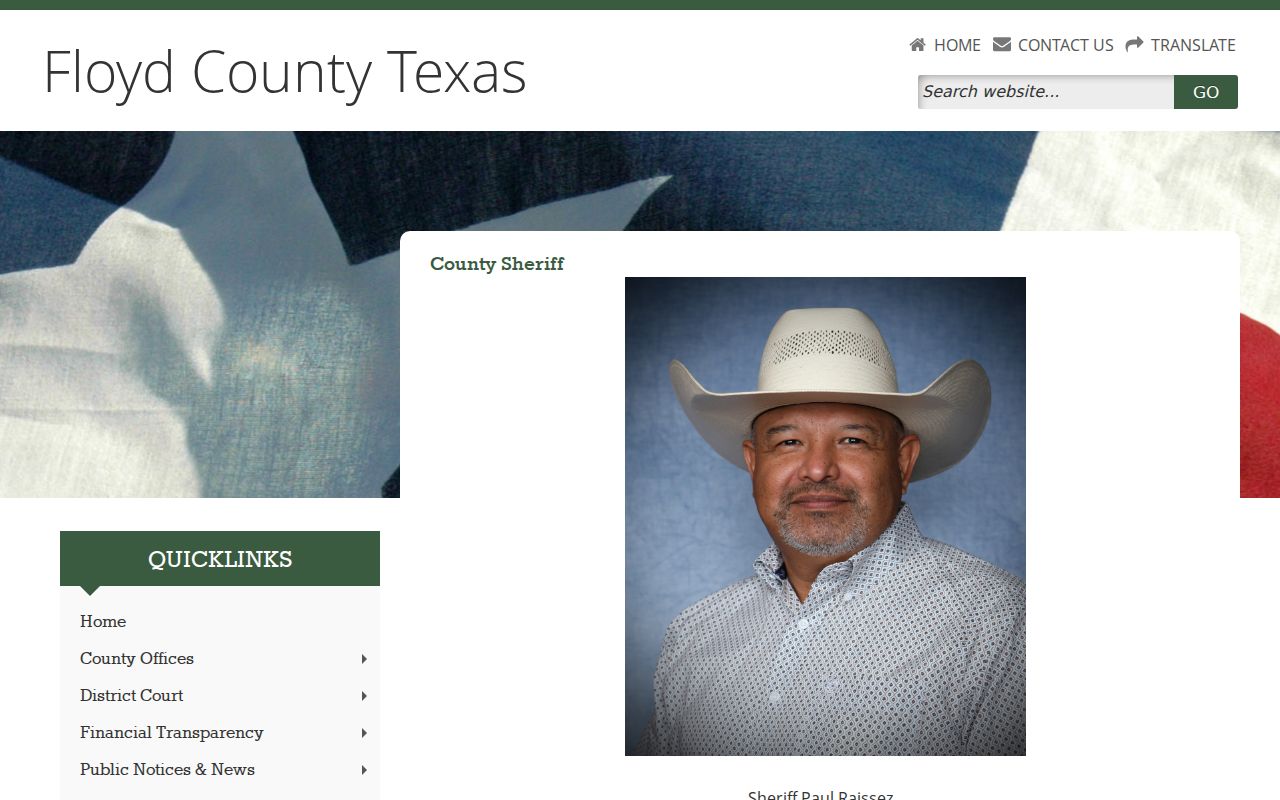
It supplies the office contact and a VINELink route, but it does not publish a daily arrest gallery, jail roster, or separate records portal.
No Floyd County Arrest Roster
Floyd County's official site has no public booking blotter or current jail-roster interface. The Texas Commission on Jail Standards report also lists local jail capacity as zero while recording a historical average daily population. That combination means a person arrested in Floyd County may be housed through another facility arrangement. Do not guess which neighboring jail receives current detainees.
Floyd County Sheriff's Office
125 E. California St.
Floydada, TX 79235
806-983-4901
Call for the current custodian and receiving facility.
Give the full name and approximate arrest date. Ask whether the person remains in custody, was released, or was transferred. Request the booking number and the current receiving facility before using another jail's roster, visitation rules, phone service, deposit vendor, or mail address. None of those services is confirmed on the Floyd County Sheriff page.
Note: Floyd County publishes no verified mobile app with an arrest, warrant, inmate, or report-request feature.
Floyd County Arrest Lookups
The strongest Floyd County arrest search starts with the closest source in time, then moves through custody, agency, court, and state records. Online silence is not a final answer because Floyd County has no unified booking portal. Keep names, dates, report numbers, and booking identifiers consistent as the search moves between custodians.
- Call the Floyd County Sheriff at 806-983-4901. Ask about current custody, release or transfer, the booking number, arresting agency, and receiving facility.
- Use the Sheriff-linked VINELink service for custody status and alerts. Treat its feed as a supplement because agency updates can lag.
- Request the arrest or offense report from the agency that created it. Floydada Police, Lockney Police, the Sheriff, and DPS each retain their own originating reports.
- After charging time, contact the correct clerk. The District Clerk handles felony files, the County Clerk handles Class A and B misdemeanors, and justice or municipal courts handle fine-only matters.
- Use the DPS name-search instructions for a later statewide result, or the DPS fingerprint guidance for one's own reliable identity match.
- When ordinary channels do not supply the existing record, send a focused Texas Public Information Act request to the agency that holds it and keep proof of delivery.
A same-day Floyd County arrest may not yet appear in a court file or DPS result. For an executed warrant, also contact the issuing court because its warrant, return, and capias entries are distinct from booking paperwork under Texas Code of Criminal Procedure Chapter 15.
Who Owns Each Floyd County Arrest Report
A Floyd County booking does not transfer ownership of the originating police narrative to the Sheriff. The correct request target is the agency whose officer produced the report. This is especially important across Floyd County's rural roads and two cities, where a search confined to one police department can miss a trooper or deputy arrest.
| Agency | Likely arrest record | Official route |
|---|---|---|
| Floyd County Sheriff | County arrest report, warrant execution, booking and custody | 125 E. California St.; 806-983-4901 |
| Floydada Police | City incident and arrest report | Verify through the official Floydada Police channel |
| Lockney Police | City incident and arrest report | Verify through the official Lockney city channel |
| Texas DPS Highway Patrol | Trooper highway or rural arrest report | DPS Highway Patrol and public-information channel |
| Floyd courts | Filed charge, docket, warrant return, and disposition | Correct district, county, justice, or city clerk |
For an agency copy, identify the date, time, location, parties, and report number if known. Ask separately for the public offense report, arrest supplement, booking sheet, bond entry, photographs, 911 or CAD material, or body-camera footage. Each item can follow a different release rule. A focused request helps the office locate existing files without asking it to create new research.
Arrest Records: What They Contain
A Floyd County booking entry captures an intake snapshot. It can tie a reported identity to an arrest date, agency, charge as received, bond, and release action. The arrest report can add the alleged facts, location, officer, and basis for custody. Texas bail law in Chapter 17 provides context for bond entries, while protected victim, juvenile, medical, and highly personal details may be redacted.
| Booking number | Local intake identifier used to distinguish the custody event and request related records. |
|---|---|
| Booking date and time | Shows when the person entered intake, not when a prosecutor filed a case. |
| Arresting agency | Identifies the likely custodian of the originating offense or arrest report. |
| Charges | Lists allegations received at intake, which may change after prosecutor review. |
| Bond | May show amount and cash, surety, personal, restricted, or no-bond status by charge. |
| Booking photograph | Release depends on the record and applicable exceptions; Floyd County posts no blanket policy. |
| Release status | Can show bond, court order, transfer, or another exit from that custody placement. |
The Floyd County bond amount at intake may not be the current controlling order. A later magistrate or trial-court action can change it. Likewise, the booking charge is not necessarily the filed count or final judgment.
Floyd County Arrests Across Custody Systems
VINELink supports custody searches and notifications using state, custody category, a name, or an offender identifier. It can help when the Floyd County Sheriff confirms a booking but a public local roster does not exist. Its availability and timing depend on participating agency feeds, so a missing or stale entry should be checked with the custodian.
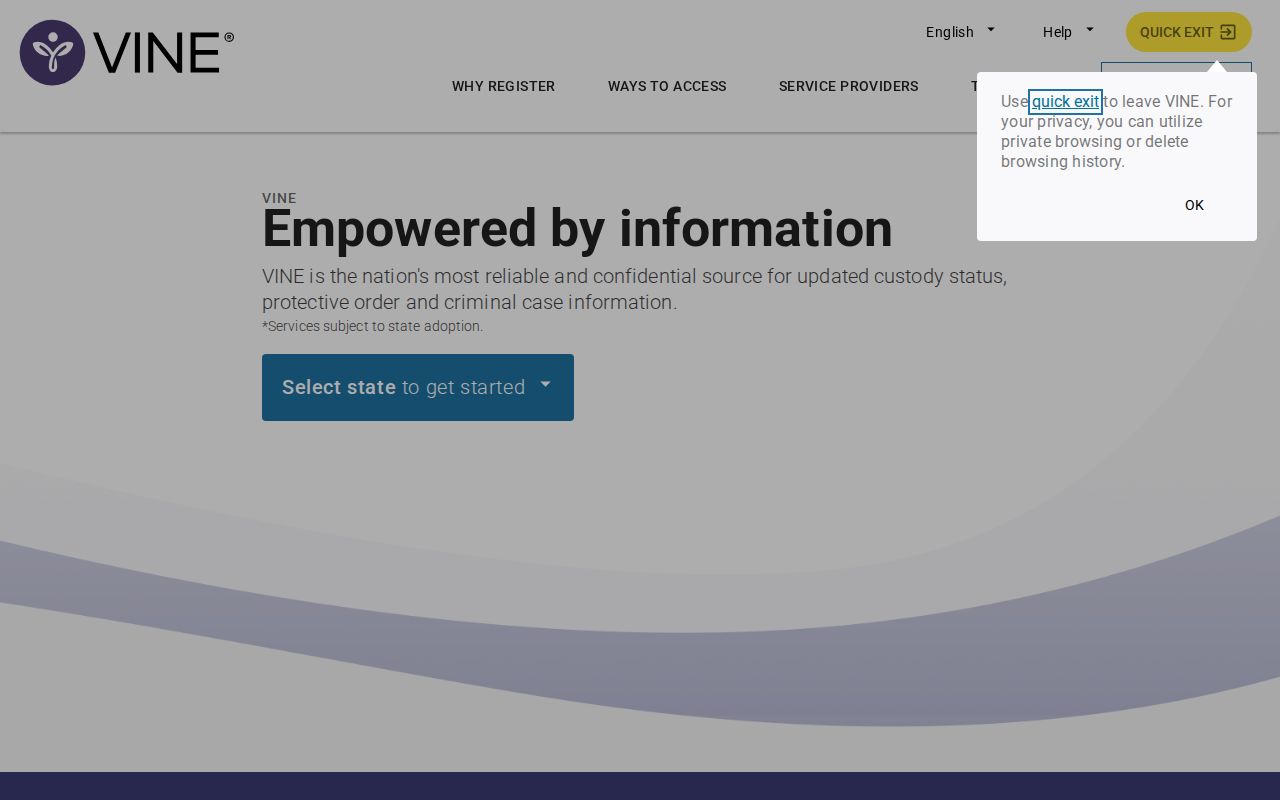
VINELink is a notification layer, not an arrest report, complete case docket, or proof of the eventual result.
After a sentence and transfer to state custody, use the TDCJ Inmate Information Search. It accepts a name, TDCJ number, or SID number, with optional sex, race, and age fields. Results can show the facility, offense, county of conviction, sentence date and length, and projected or maximum release dates. It does not show the local arrest narrative, jail cell, or full Floyd County court file.
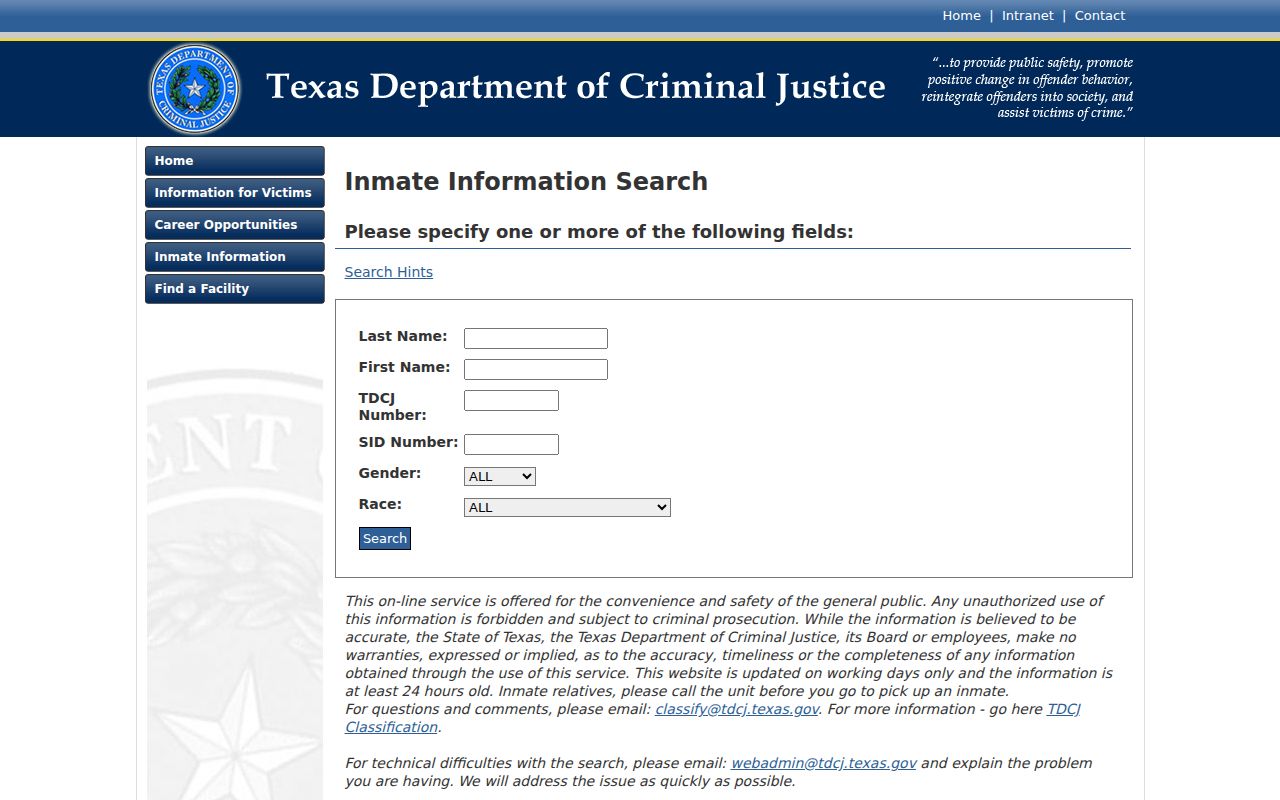
The state locator becomes useful only after transfer. A pretrial Floyd County detainee may not appear there.
Recent Floyd County Bookings
No official Floyd County daily arrest blotter, booking log, or mugshot gallery was located. No local roster update schedule is published. The practical recent-arrest path is the Sheriff phone line, the confirmed receiving facility, VINELink, and the originating agency's report channel. Unofficial mugshot and people-search sites are not substitutes for an agency record.
Even where a receiving jail supplies a roster, the display may cover only current or recent custody. An entry can roll off after release or transfer. Feed delay can also separate an arrest from its online appearance. Absence from a roster proves neither that no arrest occurred nor that an old arrest remains active.
For a filed result, allow time for prosecutor review and then check the right Floyd County clerk. A felony proceeds to the District Clerk, a Class A or B misdemeanor to the County Clerk, and a fine-only case to the proper justice or municipal court. The Floyd County court case lookup explains how those case files differ from the booking record.
Request a Floyd County Booking Record
The Sheriff's page does not publish a dedicated records unit, request form, email, fax, fee schedule, or walk-in hours. Call first. Confirm the custodian, whether the requested file exists, the accepted written channel, identification requirements, available delivery format, and the current cost rules. The downloadable complaint form is for complaints or compliments and should not be repurposed as a records request.
A useful Texas Public Information Act request names the subject, approximate date and time, location, arresting agency, booking or incident number when known, and each requested item. State whether electronic or paper delivery is preferred, and ask for a cost estimate. Separate requests for an offense report, arrest report, booking sheet, jail-log entry, bond entry, and booking photograph help the custodian find the right system.
Law-enforcement exceptions can protect investigative portions under Government Code §552.108, while privacy rules cover victims, juveniles, medical facts, and highly intimate data. Ask for the releasable portions with redactions. Floyd County posts no fixed Sheriff fee, so do not assume a price before the office quotes it.
Floyd County Arrests vs Convictions
A Floyd County arrest record shows that an agency took a person into custody or documented an arrest. It does not show that the prosecutor filed the same charge, that the court found guilt, or that the case ended in a conviction. Check the offense level against Texas Penal Code Chapter 12 and the filed case. A conviction record comes from court action and can later flow to the statewide DPS repository.
| Arrest record | Conviction record |
|---|---|
| Created by the arresting agency and intake staff | Created through the court's filed case and judgment |
| Shows an arrest and booking-stage allegations | Shows a formal finding of guilt and its disposition |
| Held by police, Sheriff, booking custodian, or receiving jail | Held by the clerk and reported through the Texas criminal-history chain |
| May end in release, no filed case, dismissal, or acquittal | May lead to sentence, supervision, appeal, or lawful record relief |
Note: A Floyd County arrest is not proof of guilt, and the filed charge or final judgment may be materially different.
After a Floyd County Arrest
Community supervision and parole begin only after court or state action, not at arrest. The official CSCD directory lists Floyd County's local court-ordered supervision office in the 110th Judicial District. The public sentencing order stays in the court file, while officer assignments and many compliance details are not ordinary open case records. Parole is state-run. The Texas Board of Pardons and Paroles makes release decisions, and the TDCJ Parole Division supervises releasees. The TDCJ Parole Division page routes readers to official supervision information.
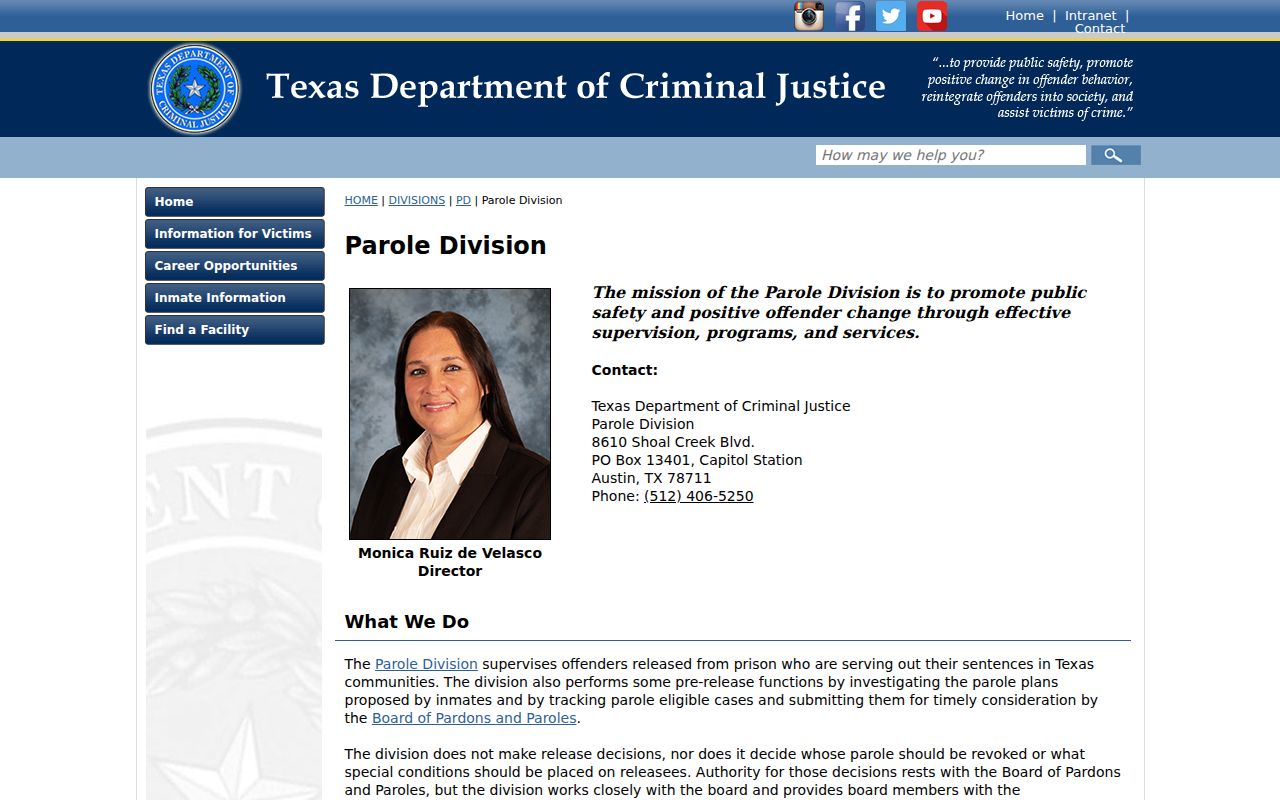
A parole page does not replace the Floyd County arrest report or judgment. Use it only after the record shows state release supervision.
The Texas Board of Pardons and Paroles publishes the separate decision-side resources.
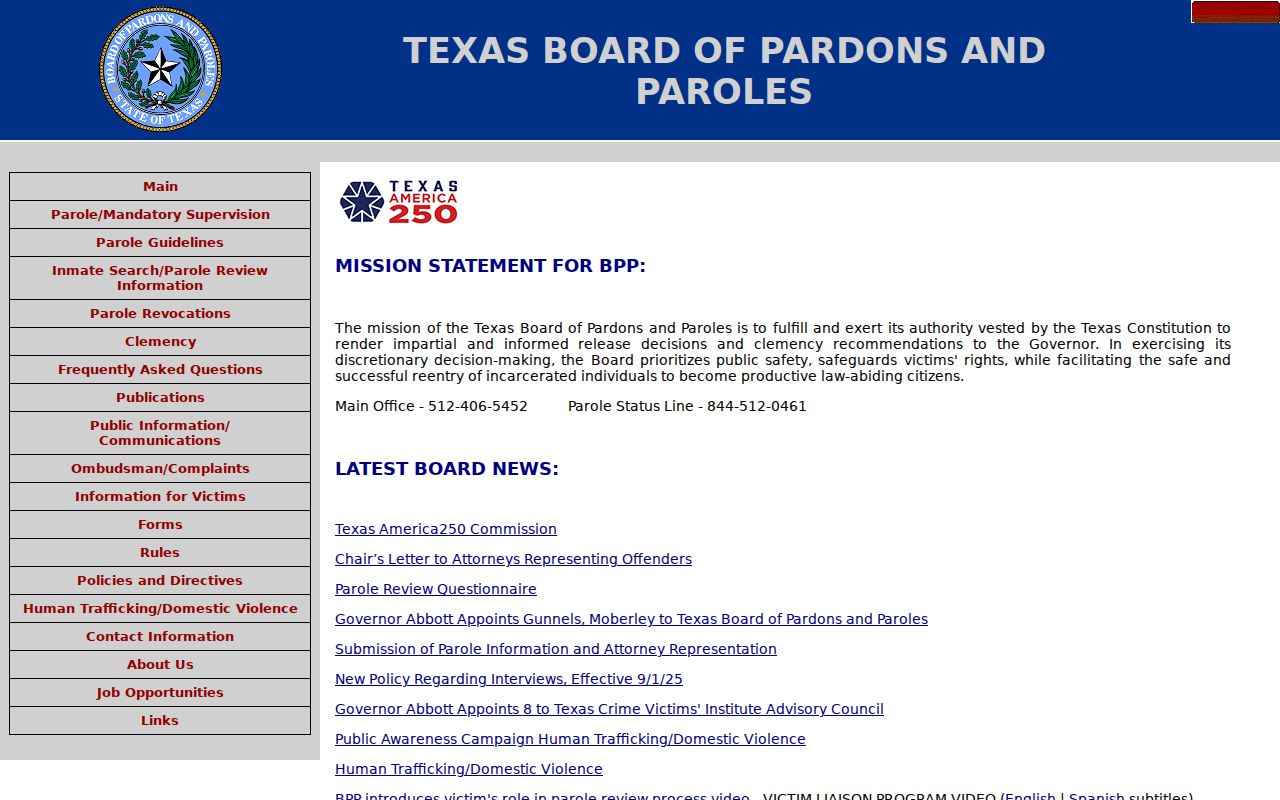
Together, the two pages explain why a parole indicator is not the same record as a local booking or a county court sentence.
Clearing a Floyd County Arrest
A dismissal does not automatically erase every Floyd County arrest entry. Current Texas Code of Criminal Procedure Chapter 55A controls expunction for qualifying arrest episodes. Eligibility can depend on an acquittal, pardon, dismissal or no-bill, limitations periods, and every charge arising from the same episode. An order of nondisclosure is different. It limits public release for a qualifying record but preserves authorized government access.
Start with the complete disposition from the proper Floyd County clerk. Identify the arresting agency, booking custodian, prosecutor, DPS, and any other office that holds a copy. Filing fees are not published on the District Clerk page, so confirm current costs and ask about a statement of inability to afford them. Keep certified orders and later review the DPS record to confirm processing.
Do not infer eligibility from a booking label or a short case summary. Texas applies arrest-episode rules, and one unresolved count can affect relief for related records. A blank search result also does not prove that an expunction or nondisclosure order exists.