
Floyd County Sex Offender Checks
The Texas Public Sex Offender Registry is the primary public lookup channel for Floyd County. Texas DPS manages the statewide database. The Floyd County Sheriff performs local registration work but does not publish a separate county list, map, search page, or alert app. For an ordinary public check, start with DPS rather than asking the Sheriff to run a broad search. The state portal can search by a registrant's name or by place. It also supplies the public profile used to match identity and read the registration record.
A Floyd County search should use the official national layer when Texas alone is too narrow. The Dru Sjodin National Sex Offender Public Website, or NSOPW, searches participating jurisdictions, and the FBI registry overview also routes the public to that source. The Sheriff's office is the local channel for registration instructions and reports of possible noncompliance. Each source has a distinct role, so one result should not be treated as a full criminal history.
Note: An address is the location reported at the displayed verification date, not a guarantee that the registrant is present now.
Search Floyd County Registry First
Floyd County includes rural land beyond Floydada and Lockney. A city-only search can miss a reported address outside either city limit. Begin with County set to Floyd. Then repeat the search around the exact place of concern using the address and the radius options shown on the live portal. When a search circle reaches a county line, run the adjacent county as a separate check. This method is more sound than assuming the map stops at a local boundary.
The DPS registry interface shown in the manifest displays the official name and location search entry point.
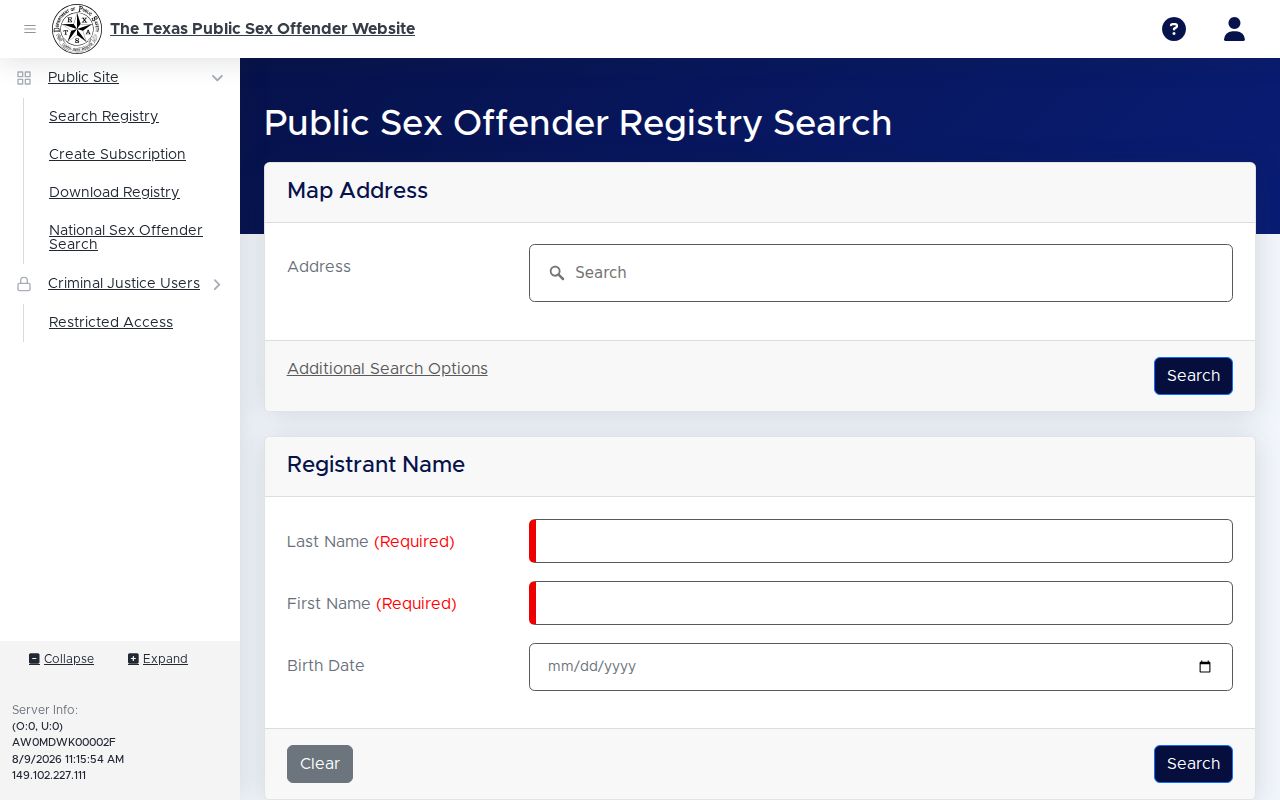
Its county, address, city, ZIP, radius, and name controls let a reader move from a wide Floyd County registry check to a more focused match.
Texas Public Sex Offender Registry Searches
The DPS portal has two useful routes. A name search works when the person's identity is known, while a geographic search works when the concern is a place. Spelling affects name results. Location filters also need care because a reported city or ZIP may not match the county boundary a reader has in mind.
- Open the official Texas registry and read the conditions and DPS disclaimer before entering search terms.
- Choose a name route or a place route. Select Floyd County for broad local coverage, then use city, ZIP, address, or radius to narrow it.
- Review the result list or map. Compare the name with the photograph, age, and physical traits instead of relying on spelling alone.
- Open the full profile. Read the registration status, verification date, offense jurisdiction, and registering agency before drawing a conclusion.
The available controls documented in the Floyd County research are listed below. Portal labels can change, so use the options displayed on the live form.
| Field or Control | Type | Use | Format Notes |
|---|---|---|---|
| Last Name | Text | Name route | Surname spelling affects results |
| First and Middle Name | Text | Optional narrowing | Given name, middle name, or initial |
| Address | Text | Geographic route | Street or address input |
| City and ZIP Code | Text or dropdown | Geographic narrowing | Texas city and five-digit ZIP |
| County | Dropdown | Optional geographic filter | Select Floyd for county-wide results |
| Radius | Dropdown | Address search | Use the distances offered live |
| Search and Reset | Buttons | Run or clear | Search runs the mode; Reset clears it |
| Map or List | View control | Results display | Switches geographic views when available |
Read Floyd County Verification Dates
The verification date gives a Floyd County profile vital context. Read it with the reported address and registration status. A current-looking street line can still reflect a report made at an earlier check-in. DPS warns that the registry depends on information from registrants and agencies, so public data can lag a move or correction. The displayed address should never be read as real-time tracking.
The manifest's neutral DPS registry profile interface shows where the public profile details are organized.
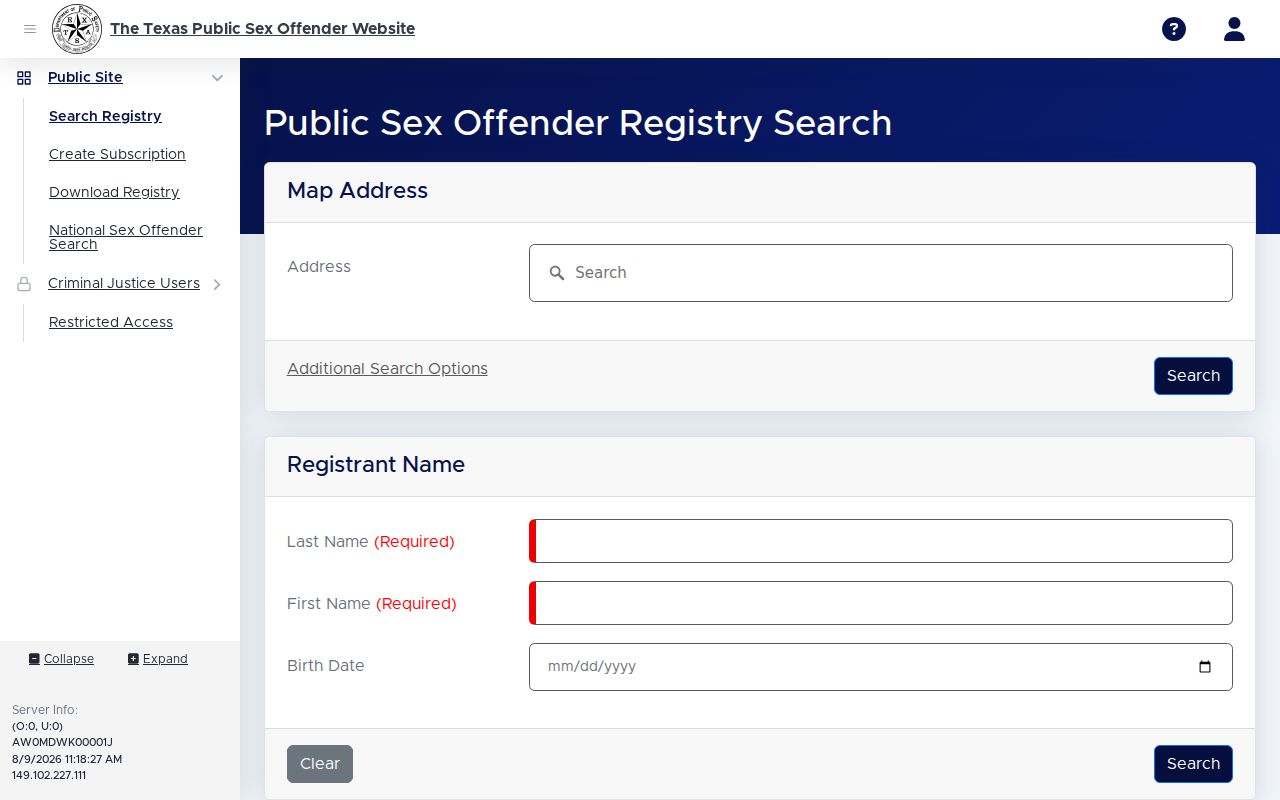
Those fields help separate a close name match from the correct Floyd County registry record without reproducing a private person's name or address.
If an address seems stale or a registration status raises concern, note the profile details and call the registering agency. Do not visit the address, confront anyone, or use the result as proof of a fresh offense.
Registry Profiles: What They Show
A public Texas profile joins identity details, the reported location, and the legal basis for registration. Some fields appear only when held and authorized for public display. The inventory below describes possible fields, not a promise that every Floyd County record contains each one. It also avoids using a private registrant as an example.
| Name and Aliases | Reported name and other names linked to the registry record. |
|---|---|
| Photo and Description | Photograph, sex, race, height, weight, hair and eye color, age information, and possible scars, marks, or tattoos. |
| Reported Locations | Address and, where authorized and held, employer or school information. |
| Offense Record | Offense description, statute, conviction or adjudication date, jurisdiction, and authorized victim category information. |
| Registration Duty | Registration requirement, registering agency, and any displayed civil-commitment indicator. |
| Status and Verification | Registration or compliance status and the date tied to the last displayed verification. |
| Other Descriptors | Vehicle, shoe size, or other authorized identifiers may appear when the registry holds them. |
Note: A name-only match is weak; compare the photograph, age, physical traits, offense jurisdiction, and current registration details before identifying someone.
Floyd County Searches Across States
DPS is the direct source for a Texas registry profile. NSOPW is the better second layer when the search crosses a state line or the person may be registered elsewhere. The two tools should be used in sequence, not treated as duplicates. The official NSOPW search shown here widens the geography across participating jurisdictions, after which the source jurisdiction's profile supplies its own terms and dates.
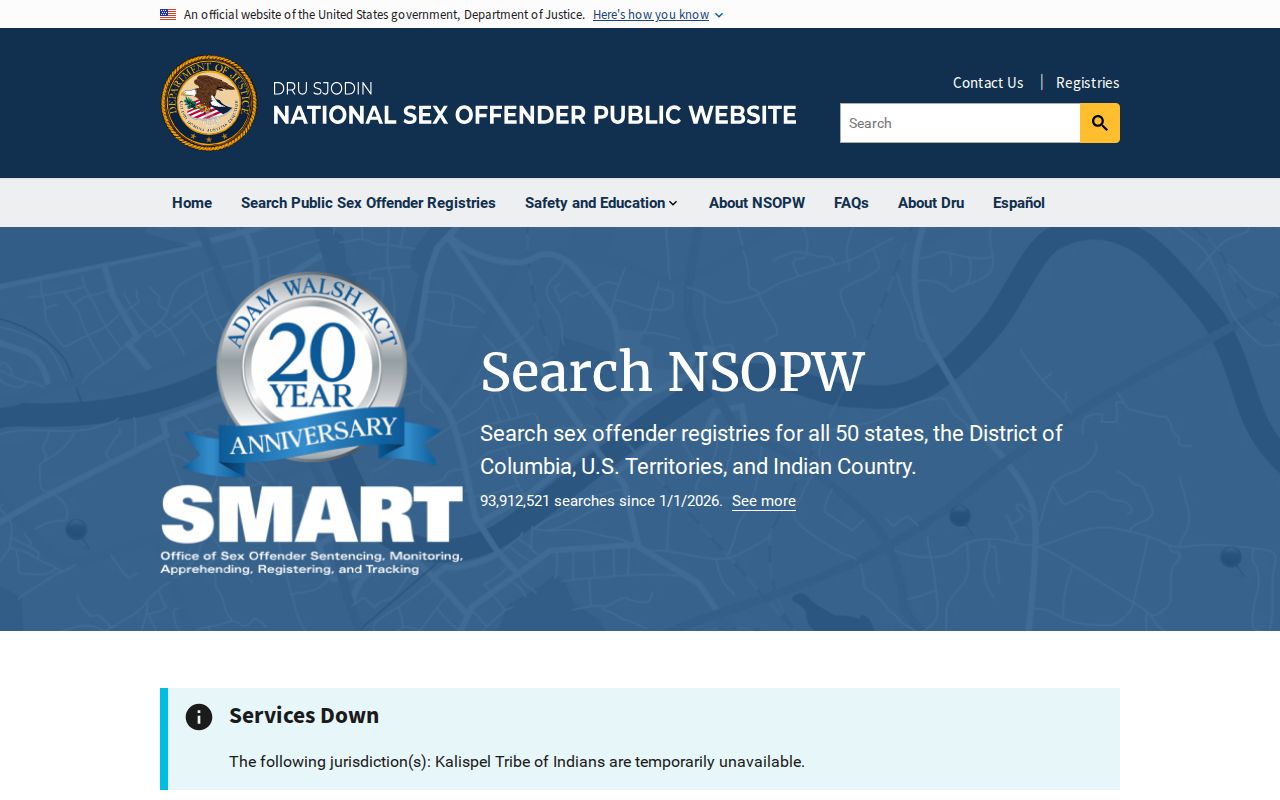
It adds a cross-state layer for Floyd County readers without replacing the Texas DPS profile or the Floyd County Sheriff's local registration role.
An FBI Identity History Summary is a different product. The FBI electronic record request portal is for a person's own fingerprint-based identity history, not a public neighborhood registry lookup.
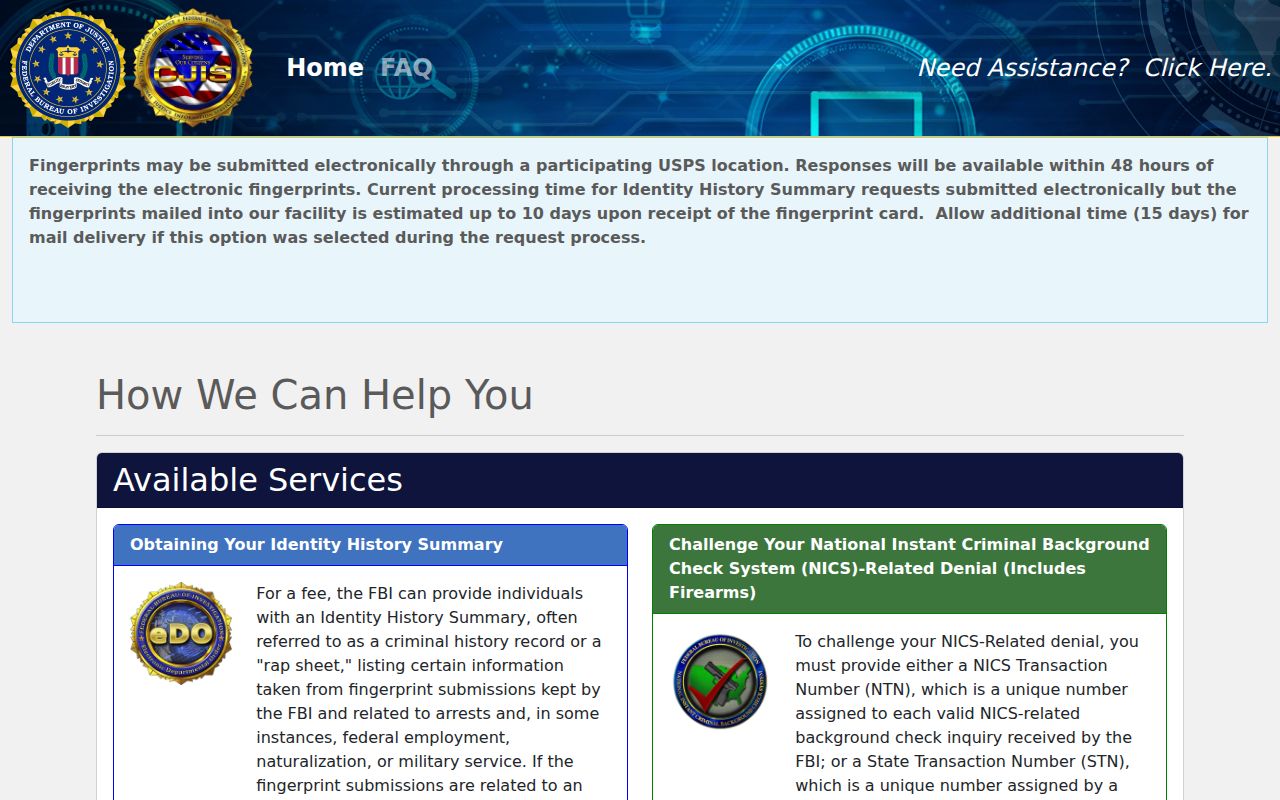
This distinction keeps a Floyd County sex offender search tied to DPS and NSOPW while reserving the FBI channel for subject-only record review.
Registration Levels and Duties in Texas
Texas does not put every public registrant into a simple Tier I, Tier II, or Tier III chart for routine public searches. Code of Criminal Procedure Chapter 62 bases the duty on the reportable conviction or adjudication, age, statutory category, and repeat-status rules. A separate risk assessment may affect notice. The table therefore uses the actual Texas duty categories documented for Floyd County instead of importing labels from another state.
| Texas Category | General Duration or Frequency | Authority |
|---|---|---|
| Certain reportable convictions or adjudications | Ten years after discharge from supervision, or the statutory juvenile period | Article 62.101 |
| Enumerated serious or repeat categories | Lifetime registration duty | Article 62.101 |
| Many registrants | Verification at least once each year | Chapter 62 verification provisions |
| Certain lifetime registrants | Verification at least every 90 days | Article 62.058 framework |
| Civil commitment | More frequent reporting under the governing provisions | Chapter 62 and Health and Safety Code provisions |
Duration and check-in frequency are legal duties, not a score of present danger. The exact offense, court record, discharge date, and statutory category matter. The public profile should be read as it stands rather than reduced to an assumed tier.
Floyd County Sheriff Registry Calls
The Floyd County Sheriff's Office is the confirmed local registration agency. Its county page does not post registry appointment hours, a separate registrar number, a fee, or a local notification page. A registrant should call for current instructions before arriving. A public researcher should use DPS for routine lookup, but may call the Sheriff to report suspected noncompliance. State the facts from the public profile and avoid speculation.
Floyd County Sheriff's Office
125 E. California Street
Floydada, TX 79235
806-983-4901
Call for current registration instructions or to report suspected noncompliance.
No official Floyd County Sheriff mobile app, proximity-alert tool, or registry alert page was found. If DPS or NSOPW displays an alert option during a live search, use only that official feature and read its current coverage terms.
Note: The Sheriff is the local compliance contact, while DPS remains the main public search and profile source for Floyd County.
When Floyd County Searches Miss
No result does not prove that a person has no reportable history. A different spelling, a former address, a record in another jurisdiction, a completed duty, or nonpublic juvenile treatment can change what appears. Run a second name search with known aliases or a middle initial. Try Floyd County as a place, then use an address radius. If another state is tied to the person or place, use NSOPW.
Registry data should also stay separate from a full criminal-history review. The DPS Criminal Records Service material shown in the manifest describes different record remedies and services, including Texas expunction and nondisclosure subjects.
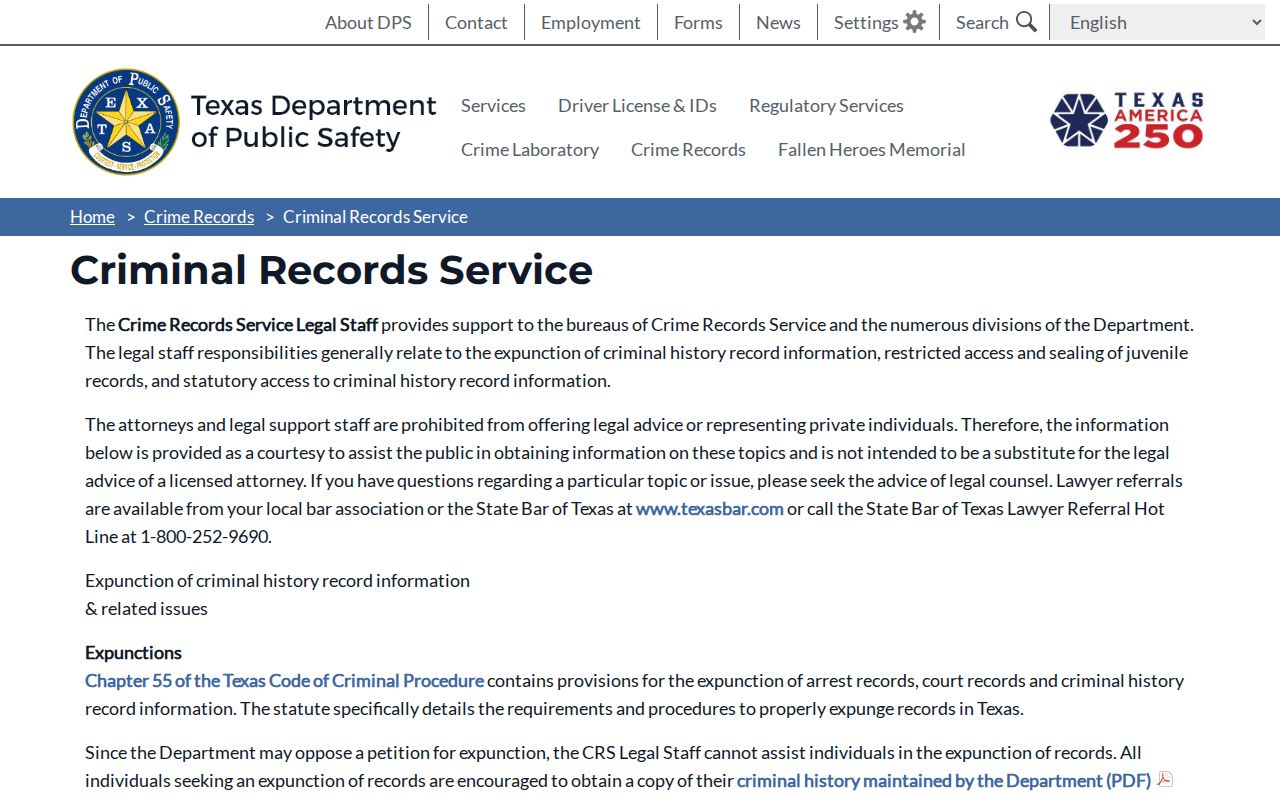
That service context explains why a missing registry result and the absence of any criminal record are not the same finding.
Using Registry Information Lawfully
The Texas registry supports safety planning and community awareness. It does not authorize threats, intimidation, trespass, vigilantism, or harassment. A profile also does not prove a new crime. Review the DPS disclaimer, match the right person, note the verification date, and confirm a real compliance concern with the Floyd County Sheriff's Office. Do not confront a registrant or household member.
Misuse can be a crime: Texas Code of Criminal Procedure Chapter 62 governs registry access and duties. Do not threaten, harass, intimidate, trespass, or misuse public profile data.
Community notice and risk assessment are not the same as the length of the registration duty. Texas law can apply different rules to notice, verification, and duration. Read each field in context. When the public record appears wrong, give the registering agency the profile details and the reason for concern, then let the agency check its own record.